
How to Stop Soil Erosion Around Your Foundation in Austin, TX
7 Kings Landscaping • November 17, 2026
Bare soil, exposed slab edges, and small gullies along the side of the house all mean rain is carrying dirt away from your foundation. This guide explains why it happens in Austin, which warning signs to look for, and the fixes that keep soil in place.
To stop soil erosion around your foundation, slope the soil away from the house, send gutter and downspout water well away from the wall, cover bare ground with plants, mulch, or rock, and add a French drain or swale where runoff collects. 7 Kings Landscaping in Austin, TX installs these erosion control and drainage fixes.
Why Does Soil Erode Around Foundations in Austin?
Soil erodes around a foundation when water moves fast across bare ground next to the house. In Austin, three things make that more likely:
- Heavy downpours that drop a lot of rain in a short time, so water runs off instead of soaking in.
- Clay-heavy soil that absorbs water slowly, so runoff stays on the surface and carries loose dirt with it.
- Roof water from gutters and downspouts that empties right at the base of the wall.
Sprinklers can add to the problem. A broken head or leaking line near the house can wash out the same spot every time a zone runs, and it calls for sprinkler and irrigation repair before it does more damage.
What Are the Signs of Erosion Around a Foundation?
The clearest sign is soil that sits lower against the house than it used to. Walk the perimeter after a storm and look for:
- Exposed slab edges or concrete that used to be covered by soil
- Small channels or gullies leading away from downspouts
- Mulch, rock, or soil washed onto sidewalks and driveways
- Puddles that sit against the foundation after rain
- Gaps between the soil and the slab, or beds that slope toward the house
Our guide to the signs your yard needs better drainage covers related problems in the rest of the yard.
How Do You Stop Erosion Around a Foundation?
Control where the water goes first, then protect the soil that remains. Work in this order:
- Fix the grade. Soil next to the house should slope away from it. The International Residential Code calls for the ground to fall at least 6 inches within the first 10 feet. Fill low spots with soil, not mulch, and compact it as you go.
- Move roof water away. Clean the gutters, then add downspout extensions or buried drain lines so water discharges away from the foundation instead of at the wall.
- Cover bare soil. Plants, mulch, and rock all slow water down. Use river rock under roof edges without gutters, where falling water hits hardest.
- Catch concentrated runoff. Where water from the yard or a neighboring lot flows toward the house, a swale or French drain can collect it and carry it to a safe outlet.
- Hold slopes in place. On steeper grades, a retaining wall or rock border keeps soil from sliding and gives water a level surface to soak into.
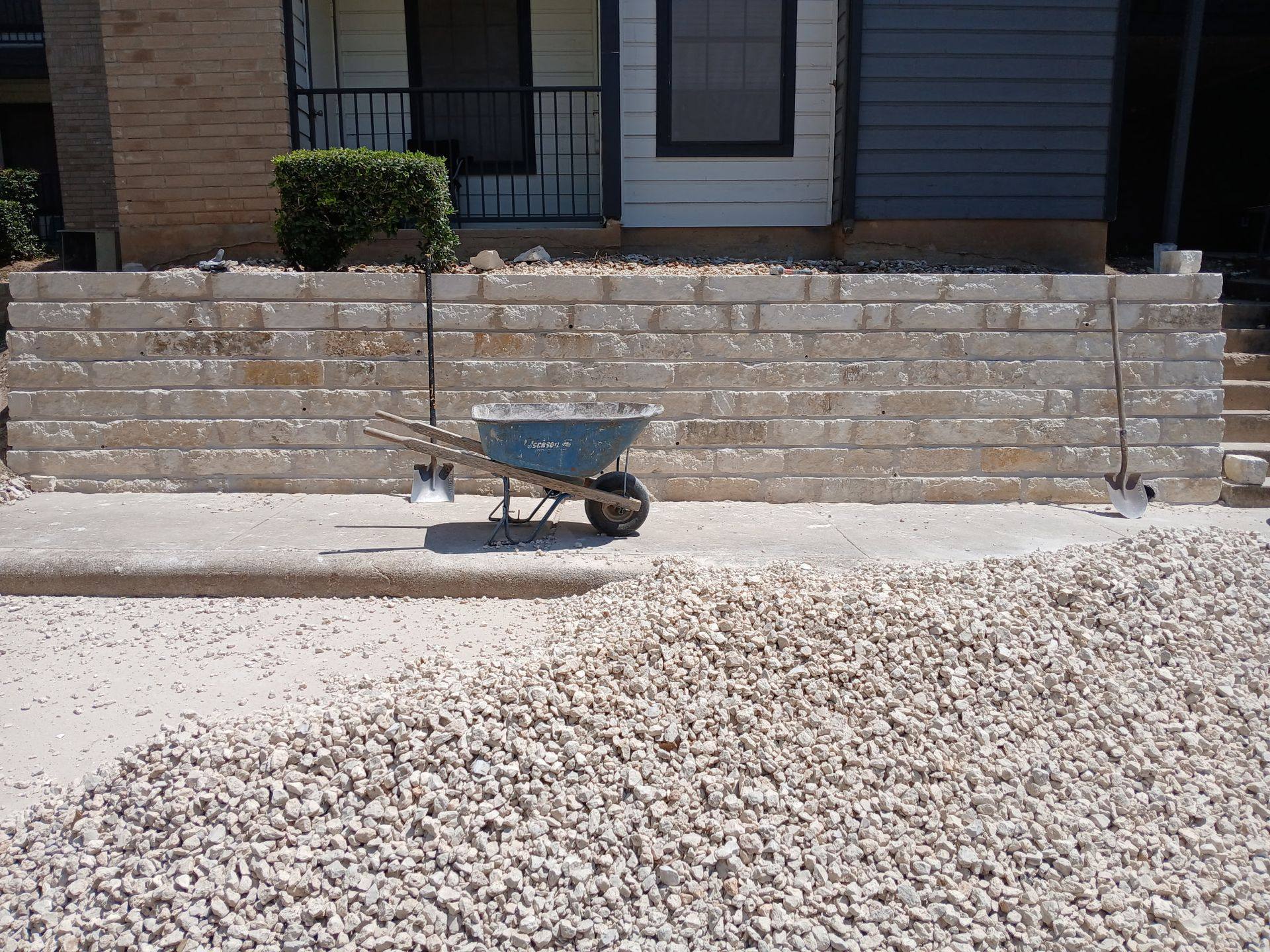
Soil type matters too. Dense clay sheds water quickly, so it often needs more help than sandy soil. Learn more in our article on how your soil drainage type affects water flow.
Should You Fix Foundation Erosion Yourself or Call a Pro?
Small fixes are reasonable DIY jobs: cleaning gutters, adding downspout extensions, and topping up low spots with soil. Call a professional when soil keeps washing out after you fix it, when water comes from more than one direction, or when the job needs regrading, French drains, or a retaining wall.
7 Kings Landscaping is an NDS Certified drainage contractor, and our erosion control and drainage services include French drains and drainage boxes, swales and regrading, downspout extensions, and rock work that holds soil in place. When beds or walls need to be rebuilt, our landscape design and installation team can plant and finish the area so it stays covered. We serve homeowners in Austin, Round Rock, and Pflugerville.
To stop soil erosion around your foundation, control the water first: slope the soil away, move roof runoff out, and catch concentrated flow with a swale or French drain. Then keep the soil covered with plants, mulch, or rock so it stays in place.
Get Help Protecting Your Foundation
Seeing washouts along your foundation? 7 Kings Landscaping is a locally owned and operated company serving Austin and Central Texas. Request your free quote today or call (512) 696-9087.
Frequently Asked Questions
How do I stop soil erosion around my foundation in Austin?
Slope the soil away from the house, extend downspouts so roof water drains away from the wall, and cover bare soil with plants, mulch, or rock. If runoff still collects near the house, a swale or French drain can carry it to a safe outlet.
Is soil erosion around a foundation serious?
Yes, it can be. When soil washes away, water can collect against the slab, and in clay soil repeated wetting and drying can lead to movement and cracks. Fixing the drainage early is usually simpler than repairing damage later.
How far should soil slope away from a house?
The International Residential Code calls for the ground to fall at least 6 inches within the first 10 feet from the foundation. Lot layouts vary, so a drainage contractor should confirm the right grade for your property.
Can mulch stop erosion around a foundation?
Mulch helps on gentle grades by slowing water and protecting bare soil, but heavy runoff can wash it away. Where water flows hard, rock, well-rooted plants, or a drainage fix work better.
Do French drains help with foundation erosion?
Yes, when the erosion comes from water flowing toward the house across the yard. A French drain collects that water in a gravel trench with a perforated pipe and carries it away, so it no longer washes soil from the foundation.
Who fixes erosion around a foundation in Austin?
A drainage and erosion control contractor can fix it. 7 Kings Landscaping is an NDS Certified drainage contractor serving Austin, Round Rock, and Pflugerville, and can often reach your property within 24 to 48 hours.