
Understanding Soil Drainage Types: How Your Yard’s Soil Impacts Water Flow
If your yard turns into a swamp after a heavy rain, or certain areas never seem to fully dry out, the problem may not be the weather — it may be your soil.
Every property has a specific structure beneath the surface that determines how water moves, settles, or drains. Understanding different soil drainage types is one of the most important steps in preventing long-term landscape issues and protecting your home from moisture-related damage.
At 7 Kings Landscaping, we often find that drainage problems aren’t caused by “too much rain.” They’re caused by soil that doesn’t handle water properly. When you understand how your soil works, you can design solutions that last.
Why Soil Drainage Matters
Drainage is about more than soggy grass. When water fails to move properly through your soil, it affects plant health, structural stability, and even your home’s foundation. Poor drainage can contribute to yard flooding, weakened turf, plant root rot, erosion, and excess moisture around foundations. Over time, those issues can escalate into expensive repairs. The key factor behind all of this is water absorption — how quickly your soil takes in moisture and how efficiently it allows excess water to move away.
That’s where soil drainage types come in.
The Three Primary Soil Drainage Types
Most residential properties fall into one of three categories: fast-draining, balanced, or slow-draining soil. Each behaves differently after rainfall.
Sandy Soil: Fast-Draining
Sandy soil contains large, loose particles. Water passes through it quickly, which means you’re unlikely to deal with standing water or yard flooding.
However, fast drainage comes with trade-offs. Because water moves through so quickly, nutrients are often washed away before plant roots can absorb them. This can lead to dry patches and struggling plants, especially during hotter months. Sandy soil typically avoids drainage issues, but it requires thoughtful irrigation and nutrient management to maintain healthy landscaping.
Loamy Soil: Balanced Drainage
Loamy soil is considered ideal because it offers a balance between drainage and moisture retention. It contains a mixture of sand, silt, and organic matter that supports healthy water absorption without trapping excess moisture. Yards with loamy soil tend to experience fewer drainage problems and stronger plant growth. Most professional landscaping strategies aim to move soil conditions closer to this balanced structure through amendments and soil improvement.
Clay Soil: Slow-Draining
Clay soil presents the biggest drainage challenges for many homeowners. Its tiny, tightly packed particles limit water absorption and slow down movement beneath the surface. When it rains, clay soil quickly becomes saturated. Because water cannot pass through easily, it pools at the surface — leading to yard flooding and prolonged soggy conditions.
Clay soil also expands when wet and contracts when dry. That repeated movement can contribute to shifting soil around foundations and hardscape surfaces. Understanding whether your property sits on clay soil is critical when addressing drainage concerns.
How to Identify Your Soil Type
You don’t need specialized equipment to get a basic idea of your soil drainage type. A simple test can provide insight. Dig a hole about a foot deep, fill it with water, and allow it to drain completely. Then refill it and observe how long the water takes to disappear. If the water drains within an hour or two, your soil is likely sandy and fast-draining. If it takes several hours, it may be well-balanced. If the water lingers for much of the day, slow-draining soil — often clay soil — is likely the cause.
This simple observation can explain recurring pooling issues and help guide next steps.
Why Yard Flooding Often Comes Down to Soil Structure
Homeowners often assume yard flooding is simply a grading problem or the result of heavy rain. While slope does matter, soil structure plays an even larger role. If the soil beneath your lawn cannot absorb water efficiently, no amount of surface-level adjustments will fully resolve the issue. Slow water absorption means rainwater has nowhere to go. It accumulates in low areas, saturates grass roots, and creates muddy conditions. Over time, repeated pooling weakens turf and increases erosion.
Addressing soil drainage types at the root level leads to longer-lasting results than surface fixes alone.
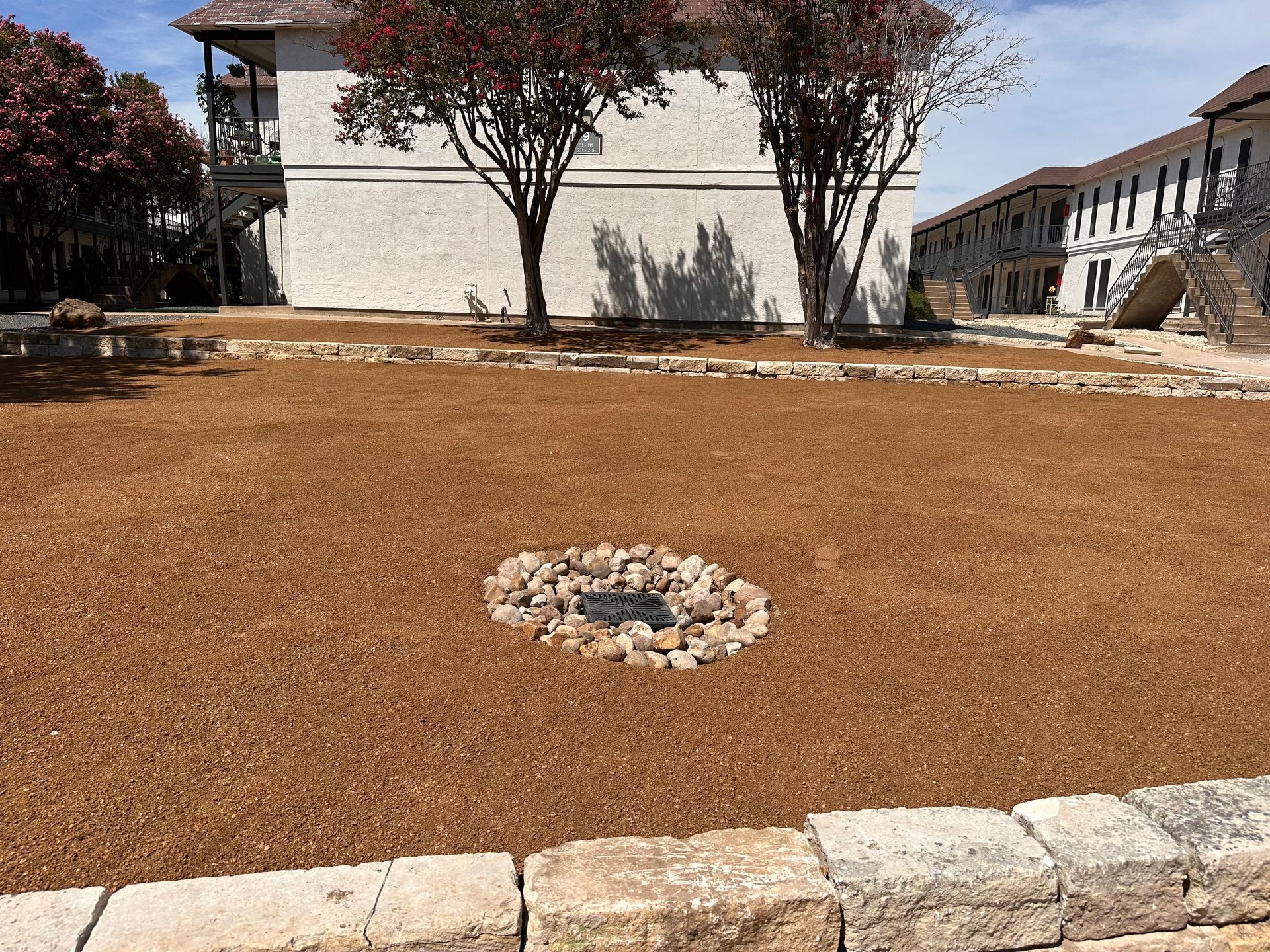
Improving Drainage Without Replacing Your Entire Landscape
The good news is that soil conditions can be improved. In many cases, the solution starts with reducing compaction. Compacted soil restricts water absorption and airflow. Core aeration creates channels that allow moisture to penetrate deeper into the ground instead of sitting on top.
In clay-heavy yards, incorporating organic matter such as compost can help break up dense particles. Over time, this improves drainage while still maintaining nutrient availability. For properties with persistent pooling, professional drainage solutions may be necessary. Subsurface systems like French drains or channel drains redirect excess water away from vulnerable areas, protecting both landscaping and structural components.
The right solution depends on understanding how water currently moves across your property.
Why Clay Soil Requires Special Planning
Clay soil deserves special attention because of its expansion and contraction cycle. When saturated, clay swells. When dry, it shrinks. This constant movement affects more than your lawn — it can influence foundations, patios, and sidewalks. If water repeatedly collects near your home due to poor drainage, the risk of soil movement increases. Over time, that stress can impact structural stability. Managing drainage around clay soil properties isn’t optional — it’s essential for long-term property protection.
Designing Landscaping with Drainage in Mind
Effective landscaping is not just about appearance. It’s about how water flows. A professionally designed landscape considers slope, soil drainage types, irrigation placement, and runoff pathways before installation begins. By planning strategically, you can reduce the risk of yard flooding and protect your investment.
Ignoring drainage at the design stage often leads to costly corrections later.
Protecting Your Property Starts Below the Surface
If you’re experiencing recurring pooling, soggy patches, or moisture concerns near your home, your soil may be telling you something important. At 7 Kings Landscaping, we evaluate soil structure, grading patterns, and water movement to identify the root cause of drainage problems. Instead of temporary fixes, we design solutions that improve water absorption and eliminate long-term flooding concerns.
Understanding soil drainage types is the first step toward a healthier, more resilient yard.
Schedule a Professional Drainage Evaluation
If yard flooding or drainage issues are affecting your property, don’t wait for the damage to spread. 7 Kings Landscaping provides professional assessments and customized drainage solutions designed to protect your home and improve your landscape’s performance.
Contact 7 Kings Landscaping today to schedule your soil and drainage evaluation and restore balance to your yard.